

The majority of people don’t take much time contemplating a filling after it’s been put in. It has been quietly working for many years, but when it suddenly breaks loose, it will surprise you. Perhaps you felt it while having lunch, or maybe your tongue was in a rough spot that was not there the day before. Can dental filling fall out? In any case, the initial thought is always the same: is this a serious issue or not? What should I do?
So, can a dental filling fall out? Yes, and it’s one of the most common dental issues dentists face. It’s not a guarantee that there was something wrong with the tooth, but it isn’t something you can ignore.
A filling exists to protect a spot that was already weakened once. Once it’s gone, that same spot is open again, leaving it more vulnerable to bacteria, temperature changes, and the everyday wear it was no longer built to handle.
Do Dental Fillings Fall Out?
Yes, dental fillings can and do come loose, and this happens more often than people think. A filling that has held for years can fall out without warning, leaving the tooth exposed to decay and bacteria. Understanding why this happens is the first step toward knowing what to do about it.
Why Do Fillings Fall Out?
There’s rarely just one culprit behind a filling coming loose. Most of the time, a few smaller factors quietly build up until it finally lets go.
Everyday wear
Every bite you take puts real pressure on your teeth, and molars in particular absorb a lot of it. Years of that repeated force gradually weaken the bond between the filling and the tooth around it, until one day it simply gives.
Decay creeping back in
Fillings treat cavities, but they don’t make a tooth immune to future ones. Bacteria that collect around the edges can allow new decay to form underneath. Once that support is gone, the filling has nothing left to hold onto and eventually comes loose too.
Grinding at night
Many people grind or clench their teeth during sleep without realizing it. That constant, low-level pressure is especially damaging to fillings, particularly composite ones, and can eventually crack the bonding material or the tooth itself.
An unexpectedly hard bite
Ice, popcorn kernels, hard candy, and fruit pits can place more stress on a filling than it was built to handle, especially if it was already a little worn. This is one of the more sudden ways a filling can come out, with no gradual warning beforehand.
A cracked tooth
Sometimes the filling was never really the problem. If the tooth underneath develops a crack, the filling loses its stable base and comes loose as a result.
Aging filling material
Composite fillings usually last 5 to 7 years, while older amalgam fillings can hold up for 10 to 15 years. No material lasts indefinitely, so replacement eventually becomes necessary even for fillings that seem perfectly fine.
A weak initial bond
Modern bonding techniques are reliable, but if moisture got into the tooth during placement, or the seal has simply thinned with age, the filling can eventually lose its grip.
How to Tell If a Filling Fell Out
Sometimes it’s obvious you see the gap, or feel something come loose mid-meal. Other times, the only clue is a change your tongue notices before you consciously register anything.
Signs worth paying attention to include:
- A rough or jagged edge where the tooth used to feel smooth
- A small pit or visible gap where the filling used to sit
- New sensitivity to cold drinks or sweets
- Pain or discomfort when you bite down
- Food that keeps getting stuck in one particular spot
- A tooth that just feels off compared to the others
Plenty of people don’t feel any pain at all when a filling comes out, since the nerve isn’t always exposed right away. That doesn’t mean the tooth is fine, just that the damage hasn’t reached the deeper layers yet. A lost filling can happen to any tooth, though molars tend to bear the most daily pressure.
What Happens When a Filling Falls Out?
The longer your tooth sits uncovered, the higher the risk of bacteria getting in. At first, you may notice only slight sensitivity. Over time, though, plaque and food particles collect in the open space, which can lead to new decay, a cracked tooth, or an infection that spreads to the pulp.
Most people wait to act until something hurts, but pain usually shows up only after the problem has already progressed. By the time it starts, the damage is often worse than it needs to be.
What Should You Do If Your Filling Falls Out?
Don’t panic — this is very treatable. Until you can get to your dentist:
- Rinse gently with warm water to clear the area
- Avoid chewing on that side of your mouth
- Skip sticky, crunchy, or very hard foods
- Steer clear of extremely hot or cold drinks if the tooth feels sensitive
- Brush carefully around the spot without pressing hard
- Call your dentist’s office to get on the schedule as soon as you can
If you happen to find the filling itself, bring it along to your appointment. Your dentist likely won’t reuse it, but seeing it can sometimes help explain why it failed in the first place.
What You Shouldn’t Do
A few instincts are worth resisting here:
- Don’t try to glue the filling back in yourself. Household adhesives aren’t meant for the mouth and can trap bacteria underneath.
- Don’t assume no pain means no problem. Plenty of damaged teeth stay quiet until decay reaches the nerve.
- Don’t chew on the affected tooth “just this once.” Even soft foods put pressure on a weakened area.
- Don’t reach for very sticky or very hard foods until it’s repaired.
Is a Lost Filling a Dental Emergency?
Usually not. In most cases, minor sensitivity can safely wait a few days for an appointment. But contact us right away if you experience swelling, throbbing pain around the gums, a visibly cracked tooth, bleeding that won’t stop, or pain that keeps getting worse; these symptoms suggest the problem may go beyond the filling. If you’re unsure whether your symptoms require immediate care, read our guide on Dental Emergencies to understand when you should seek prompt treatment.
How Is a Lost Filling Actually Fixed?
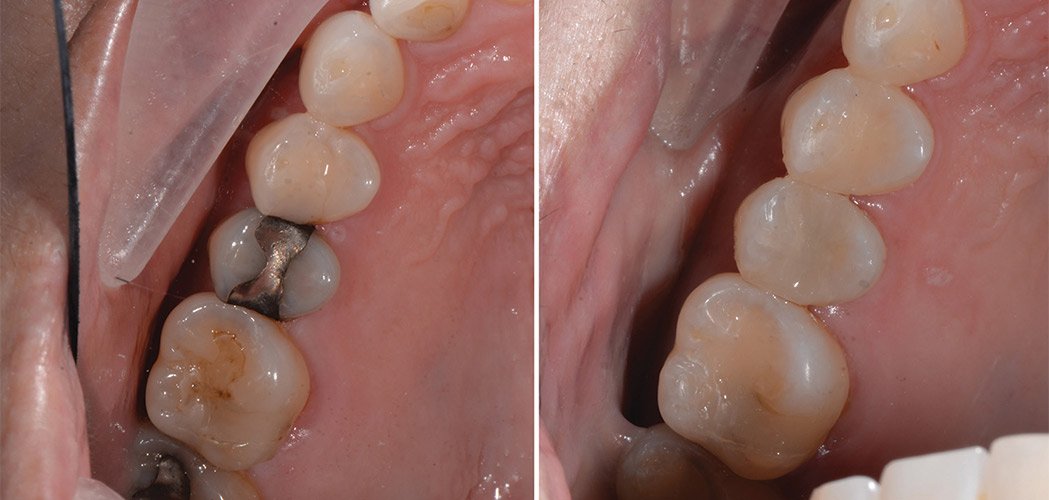
The right fix depends on what’s left of the tooth once the filling is gone.
| Situation | Likely Treatment |
| Tooth is otherwise healthy | A straightforward new filling |
| Cavity has grown larger | A more substantial restoration |
| Tooth structure is significantly weakened | A dental crown to protect what remains |
| Decay has reached the nerve | Root canal therapy before any restoration |
Can the Same Filling Just Go Back In?
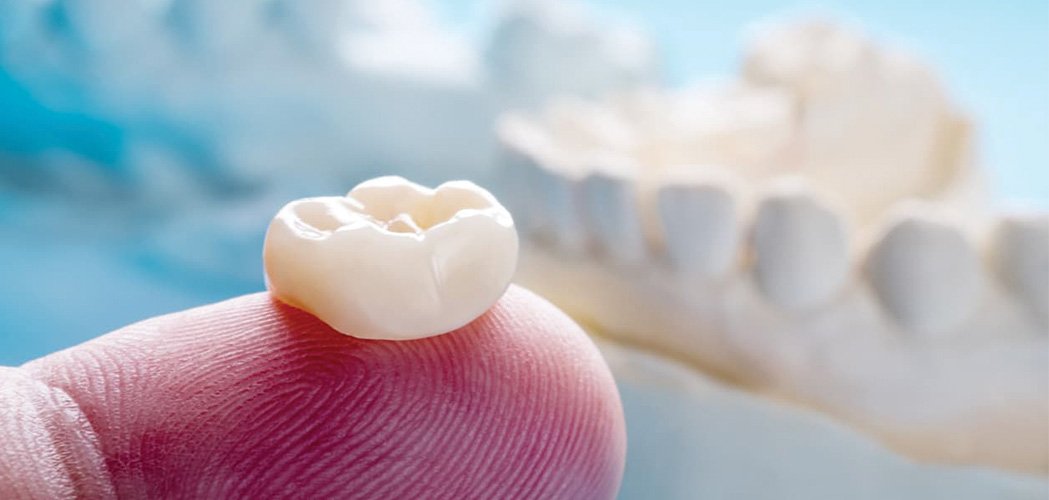
It’s a fair question, but the answer is almost always no. Once a filling separates from the tooth, the original seal is broken, and there’s a good chance bacteria have already gotten in, even if the piece itself looks fine. A new, properly bonded restoration is really the only reliable fix.
How to Prevent Fillings From Falling Out
No filling lasts forever, but a few habits genuinely extend how long one holds up:
- Brush twice daily with fluoride toothpaste
- Floss every day, especially around existing fillings
- Avoid chewing ice or using your teeth to open packaging
- Wear a custom night guard if grinding is an issue
- Keep up with regular dental visits so a weakening filling gets caught early
- Cut back on sugary or acidic foods that encourage decay along the edges
For additional tips on protecting your teeth and maintaining dental restorations, learn more about dental fillings from the American Dental Association (ADA).
When to See a Dentist
If you suspect a filling has come loose, there’s no need to wait until it hurts; the unprotected tooth is already more vulnerable to decay and fracture the moment the filling is gone.
Patients across Canton, Dedham, Milton, Sharon, Stoughton, Randolph, Norwood, Westwood, Braintree, and Brockton can reach Allure Dentistry & Aesthetics during office hours Monday through Thursday, 8 AM to 5 PM, and Friday, 8 AM to 1 PM for a prompt evaluation and repair through the practice’s restorative dentistry services.
Frequently Asked Questions
Q1. Can a filling come out without any warning?
Yes. It can wear down gradually from hidden decay, or come loose suddenly from hard biting or unexpected trauma.
Q2. Can fillings fall out even years after being placed?
Yes, and this happens more often with older restorations, since every filling has a natural lifespan before wear or decay sets in.
Q3. Can a filling fall out from brushing too hard?
It’s unlikely on its own, but aggressive brushing on an already-weakened filling can occasionally speed up the process.
Q4. Can dental filling fall out during sleep??
It can, especially for people who grind or clench their teeth at night without realizing it.
Q5. Why did my filling fall out after years with no issues?
Fillings wear down over time, and new decay forming underneath can eventually break the seal holding it in place.
Q6. How can I tell if a filling fell out without a mirror handy?
Run your tongue over the tooth. A rough patch, an unfamiliar gap, or new sensitivity are usually enough to confirm it.
Q7. What causes a filling to fall out earlier than expected?
Grinding, an imperfect bond at the time of placement, or biting down on something unexpectedly hard are the most common early causes.
Q8. Can a cavity filling lead to a whole new cavity if it falls out?
Yes. Once the tooth is exposed again, it’s just as susceptible to new decay as it was before the filling was placed.
Q9. Can a filling come out in one piece?
Sometimes — though it can also crumble or come out in small fragments, depending on how it failed.
10. Does it hurt when a filling falls out?
Sometimes, and sometimes not at all — it largely depends on whether the nerve is close to the surface at that spot.
Q11. What happens if a few weeks pass before treatment?
The risk of new decay, sensitivity, and infection climbs the longer the tooth stays exposed and untreated.
Conclusion
If you’ve been wondering, “can dental filling fall out,” after noticing a loose or missing filling, the team at Allure Dentistry & Aesthetics in Canton, MA is here to help. After a thorough examination, Dr. Carolina Velez and Dr. Daniel Gonzalez will identify the underlying cause and recommend the most appropriate treatment to restore your tooth and protect your long-term oral health.