

| Quick Answer: Gum is red because the tissue is inflamed. Common causes include plaque buildup, aggressive brushing, hormonal changes, or an ill-fitting crown. Mild redness often improves with better oral care, but if it lasts longer than a week, bleeds frequently, or affects only one area, schedule a dental evaluation. |
Here’s the thing about gums: you don’t really think about them until they look wrong. Healthy gum tissue sits at a pretty consistent pink, firm, nothing dramatic. So when your gum is red and you catch sight of it in the mirror, it stands out. That color didn’t change without a reason. Something under the surface is inflamed, and inflammation is basically your body waving a flag.
This piece goes through what actually causes it, what the different patterns of redness tend to mean, and when it’s worth picking up the phone instead of just switching toothbrushes.
What Does It Mean If Your Gum Is Red?
In simple terms, more blood flows into the tissue than usual. Gums normally get their pink shade from a steady, normal blood supply right under the surface. Something irritates that area, whether it’s bacteria, friction, pressure, or other forms of irritation, and the body reacts by widening blood vessels and rushing more blood in. That’s the redness.
Healthy Gums vs. Red Gums
Healthy gums: even pink, firm, no bleeding when you brush. Red gums: darker, sometimes puffy, might feel a little sore if you poke at it. It’s not just a color thing. There’s an actual process happening underneath.
Why It Happens, Biologically Speaking
Plaque bacteria sit along the gumline, and your immune system recognizes it as an irritant and responds by increasing blood flow to the area. That’s what turns pink tissue red and swollen. Physical irritation, such as brushing too hard, triggers roughly the same response, minus the bacteria.
Common Causes of Red Gums
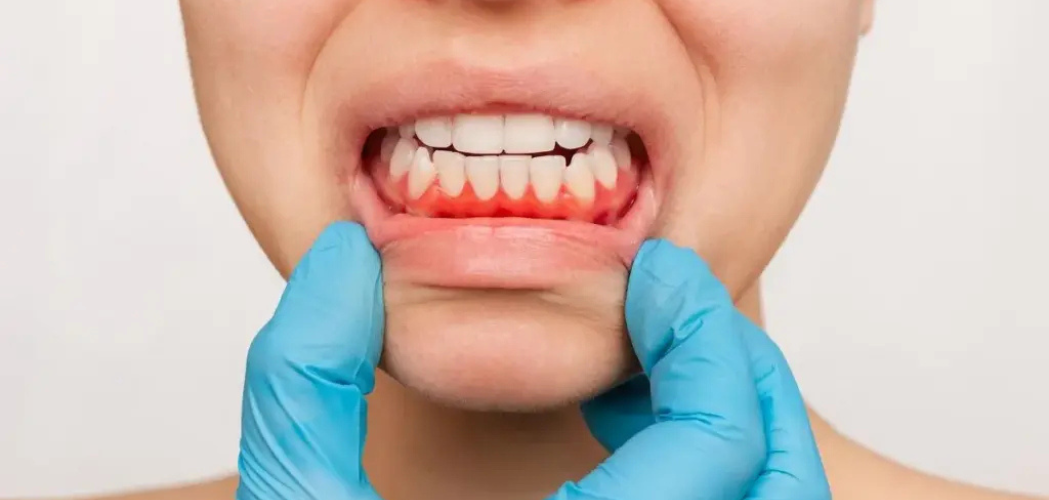
There’s no single answer here. It could be one thing. It could be a few things stacked on top of each other.
Plaque and Gingivitis
The most common cause, by a wide margin. Plaque that isn’t cleared regularly hardens into tartar, and the gums stay irritated because of it. That’s gingivitis, technically the earliest and most reversible stage of gum disease, according to the ADA’s oral health resource MouthHealthy. A red gum line tracing along the edge of several teeth is usually the first tell.
Regular preventative dentistry visits and professional cleanings help remove plaque before it leads to gingivitis or more serious gum disease.
Brushing or Flossing Too Aggressively
Pressing down hard doesn’t clean better. It just irritates the tissue. Same with snapping floss instead of easing it between teeth. This kind of redness is usually more localized, and it tends to fade once the technique changes.
Hormones
Pregnancy, puberty, your cycle, menopause, all of it shifts blood flow to the gums. Plenty of people notice their gums are bright red or more sensitive during these stretches, even when nothing about their brushing routine has changed.
Not Enough Vitamin C
Less common, but real. Vitamin C helps with collagen production in gum tissue, and a shortage leaves gums fragile, red, sometimes bleeding without much provocation.
A New Toothpaste or Mouthwash
Switched products recently and your gums started acting up right after? Probably not a coincidence. Sodium lauryl sulfate and certain flavoring agents irritate sensitive gum tissue in some people.
Dental Work That Doesn’t Fit Quite Right
A crown, filling, denture, or retainer that rubs the same spot every time you eat or talk will eventually leave a red patch right there. It’s friction, plain and simple.
Breathing Through Your Mouth
Saliva protects gum tissue. Mouth breathing, especially overnight, dries that protection out, and a lot of people wake up with gums that look more irritated than they did the night before.
Smoking
Tobacco restricts blood flow to gum tissue while irritating it at the same time, so it can actually mask early redness even as damage continues underneath.
Different Ways Red Gums Can Appear
Not all red gums look alike, and the pattern usually tells you a lot.
A Thin Red Line Along the Gums
Tracing along several teeth at the edge, that’s usually early plaque buildup, not an injury.
Blotches or a Single Red Patch
Uneven, one spot instead of a clean line. Think rough filling edge, small injury, or a denture rubbing the same place over and over.
Gum Is Red and Hurts Around One Tooth
This one’s usually specific. Trapped food, a cracked filling, maybe the start of an infection near the root. Worth checking that exact spot rather than waiting.
If the redness is accompanied by severe pain, swelling, or signs of infection, you may need prompt Emergency Dental Care to prevent the problem from becoming more serious.
The Whole Gumline Is Bright Red
Widespread redness lines up more with gingivitis, or something systemic like a new medication or a vitamin gap, than one isolated irritant.
What Do Red Gums Mean, Exactly?
Red gums meaning is simple in most cases: inflammation. But the shade and location matter. Dark red gums, especially around the back teeth or below a crown, often point to longer-standing irritation than a fresh, bright red patch. Reddened gums that show up overnight are usually reactive, something rubbed, poked, or irritated the tissue recently. Gums that have been red and inflamed gums for weeks, on the other hand, are more likely tied to plaque buildup that hasn’t been cleared.
It’s also worth knowing that red gums not gingivitis is entirely possible. Redness alone doesn’t confirm gingivitis, that diagnosis needs an actual exam. A single irritated patch, a reaction to a new toothpaste, or friction from a denture can all cause redness without any active gum disease.
Common Red Gum Symptoms and Their Possible Causes
| What You’re Seeing | What’s Probably Going On |
| Red gum line along several teeth | Plaque buildup, early gingivitis |
| Redness around one tooth only | Trapped food, cracked filling, localized infection |
| Entire gumline is bright red | Gingivitis, hormonal shift, medication reaction |
| One red patch or blotch | Friction, minor injury |
| Red, swollen gums that bleed easily | Plaque and tartar buildup |
| Gum is red and hurts when chewing | Ill-fitting dental work |
Not a diagnosis. Just a starting point for deciding whether to wait it out or make a call.
Other Symptoms That Tend to Show Up Alongside It
Redness usually isn’t alone. Keep an eye out for:
- Puffiness or swelling along the gumline
- Bleeding during brushing or flossing
- Soreness when you touch the area
- Bad breath that doesn’t budge with regular brushing
- Gums that look unusually shiny or smooth
- Gums that seem to be pulling back from the tooth a little
A couple of these showing up together? That’s usually more than a “switch to a softer toothbrush” situation.
When It’s Time to Call a Dentist
A little redness after brushing too hard isn’t a big deal. But get it checked if:
- It’s still red after a week or more
- Bleeding happens regularly, not just once in a while
- There’s swelling, pus, or a bad taste near one tooth
- The redness stays put in one spot and won’t quit
- Teeth feel loose or gums look like they’re receding
If there’s swelling, pus, or real pain involved, that’s not really a “wait and see” situation anymore. That’s dental emergency territory, and it’s worth calling right away instead of waiting for a routine appointment.
What Actually Happens at the Exam
A dentist measures around each tooth with a small probe, checks for bleeding points, and asks about habits, medications, and general health. That’s usually enough to figure out what’s actually causing it instead of just treating the color.
It’s worth noting that every mouth is different, so the real cause behind gum redness should get confirmed by an actual exam, not a guess based on an article.
How It Gets Treated
Depends entirely on the cause. Guessing wastes time.
A Professional Cleaning
For plaque-related redness, a standard cleaning clears the tartar above and below the gumline. Most people see things go back to a healthy pink within a couple weeks.
Scaling and Root Planing
For more advanced inflammation, this deep-cleans below the gumline and smooths the root so the tissue can reattach and calm down.
At-Home Care
Sometimes it’s genuinely that simple: softer brush, lighter pressure, actual flossing technique instead of just going through the motions.
Fixing What’s Actually Rubbing
If it’s a crown or denture causing the friction, adjusting it is what fixes things. No amount of brushing solves a fit problem.
Keeping Gums From Turning Red in the First Place
- Brush twice daily with a soft-bristled toothbrush using gentle circular motions.
- Floss once a day to remove plaque between the teeth and along the gumline.
- Rinse with warm salt water if your gums feel mildly irritated.
- Replace your toothbrush every three to four months.
- Schedule regular dental cleanings, even if your gums feel healthy.
- Avoid tobacco products.
- Tell your dentist about any new medications or supplements.
Frequently Asked Questions
Q1. Does red gum always mean gingivitis?
Not always. Gingivitis is the usual suspect, but hard brushing, hormones, an allergic reaction, or a bad-fitting appliance can all do it too.
Q2. Why is my gum red around just one tooth?
Usually something local to that spot. Trapped food, a rough filling edge, or an early infection near the root. Get that specific area looked at instead of waiting to see if it spreads.
Q3. Can gums be red without hurting at all?
Yes. Early gum inflammation is often painless, which is why gingivitis can go unnoticed in its early stages.
Q4. How long until red gums heal?
Redness from rough brushing usually clears in two or three days. Plaque-related redness needs a cleaning first, then another week or two to fully settle.
Q5. Only one gum is red, should I worry?
A single red spot is usually easier to trace back to a cause. If it’s still there after a week, get it checked
Q6. Can red gums heal without a dentist visit?
Sometimes, if it’s mild: better brushing, better flossing. But once plaque’s hardened into tartar, a professional cleaning is really the only thing that clears it.
This information is educational and doesn’t replace a professional dental examination.
If Your Gum Is Red and Not Getting Better
If it stays red, keeps bleeding, or starts hurting, that’s the point where it’s worth scheduling an exam with Allure Dentistry & Aesthetics.Catching it early usually means a simpler fix. Early treatment can also help prevent minor gum irritation from developing into more advanced gum disease. Meet our experienced dental team, including Dr. Carolina Velez and Dr. Daniel Gonzalez, who proudly care for patients from Canton, Dedham, Milton, Sharon, Stoughton, Randolph, Norwood, Westwood, Braintree, and Brockton.