
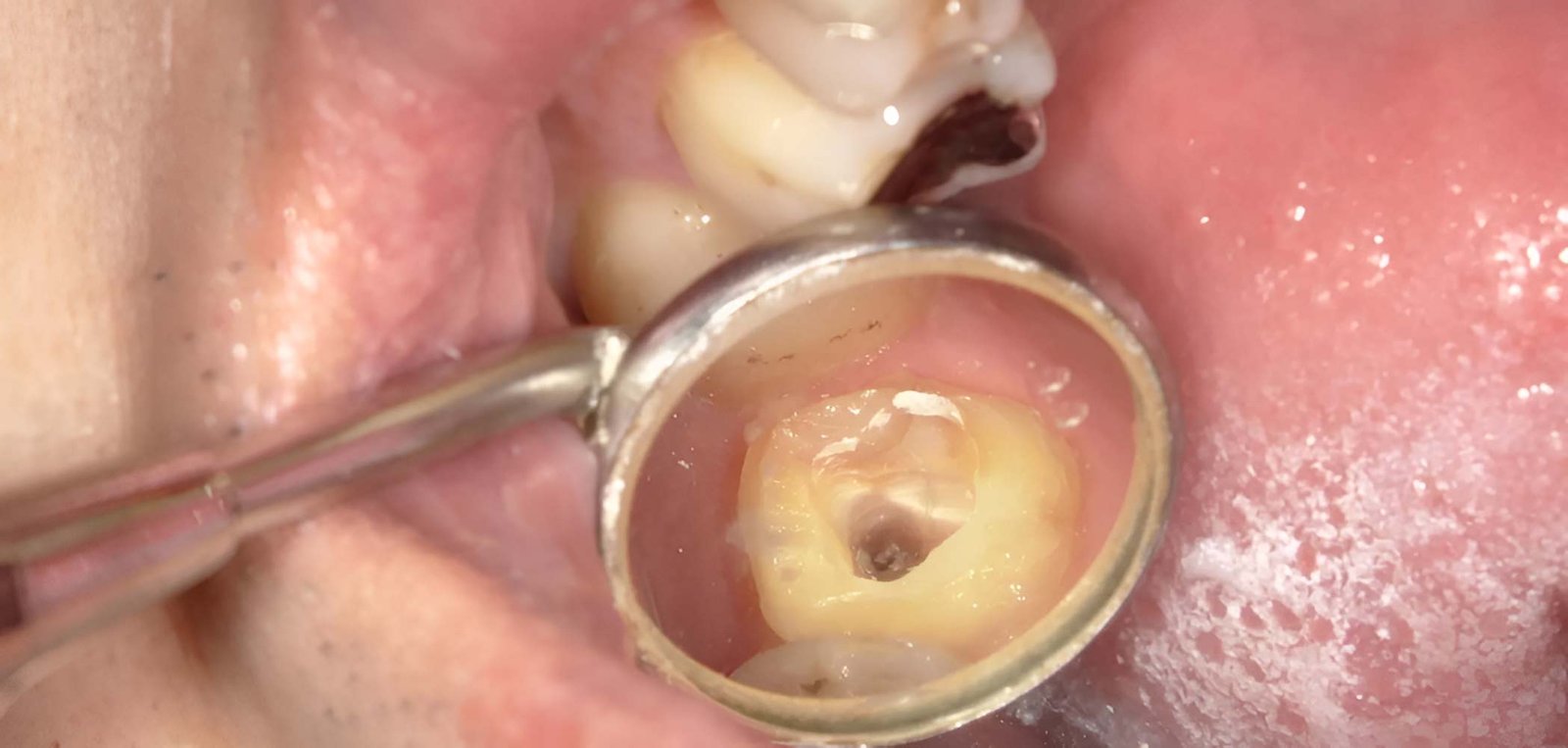
| Quick Answer: A cracked tooth root after a root canal often develops because the tooth already had less structural support from decay, large restorations, or an existing crack. The treatment itself doesn’t cause the crack. Some cracks respond well to a crown or retreatment. A true vertical root fracture generally has a much poorer outlook and often means extraction. If you notice sudden pain when biting down, don’t wait. An early exam can be the difference between saving the tooth and losing it. |
Root canal treatment clears out infected or inflamed pulp from inside a tooth. It doesn’t rebuild structural damage that existed beforehand. A cracked tooth root after a root canal often traces back to a tooth that already had significant structural loss. That loss can come from decay, a large filling, or a pre-existing crack. This earlier weakness affects how well the tooth handles biting forces after treatment.
Why Root Canal Teeth Are More Prone to Cracking
Root canal treatment requires an opening into the tooth. The dentist may remove some tooth structure during access and restoration. Modern technique still tries to preserve as much healthy structure as possible.
What matters more is what the tooth looked like before treatment started. How much decay it had. How large the old filling was. Whether it already carried some structural weakness.
That remaining tooth structure is a major factor in fracture risk. It’s also why dentists so often recommend a crown after treatment. A crown isn’t just cosmetic. It gives the tooth the outer support it needs to handle normal biting forces going forward.
How a Cracked Tooth Root Differs From a Cracked Crown
Patients often assume new pain after a root canal means the crown has failed. Usually, that’s not what’s happening. A crown sits on top of the tooth and shields the visible portion. The root sits below the gumline, so a crack there often stays hidden. Patients can’t always see or feel it directly. Instead, it tends to show up as a dull ache, discomfort when biting down, or a small bump on the nearby gum. That’s a sign something below the surface needs attention.
Recognizing Root Canal Cracked Tooth Syndrome
Dentists sometimes use a broader term for this pattern: cracked tooth syndrome. It describes a cluster of symptoms from an incomplete fracture, one that frequently doesn’t show up clearly on an X-ray. A tooth that’s already had a root canal presents differently. There’s no live nerve inside to produce the classic sharp pain signal a healthy tooth would give off.
Fractured Root Symptoms You Shouldn’t Brush Off
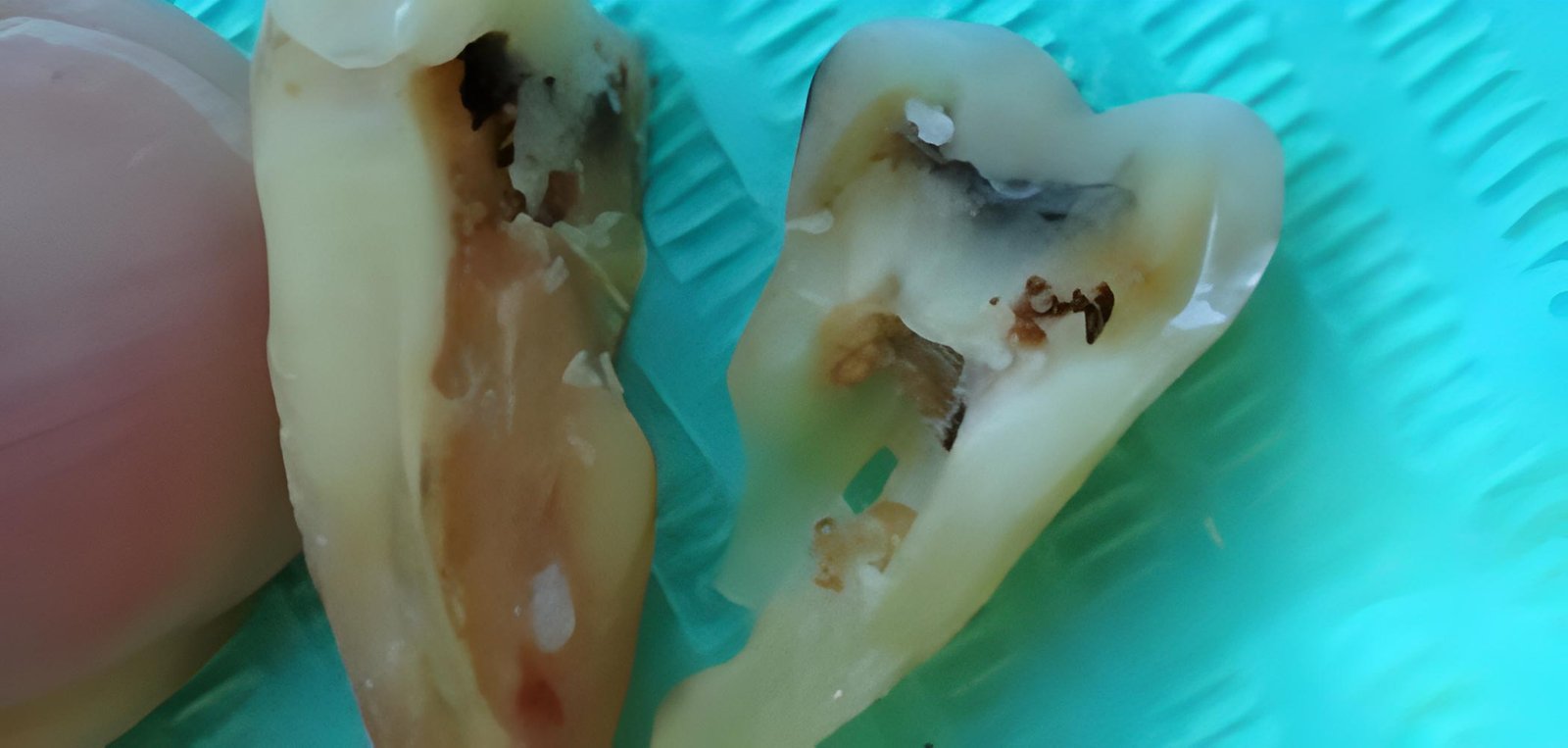
Symptoms of a fractured tooth root are easy to dismiss early on. They come and go instead of staying constant. Here’s what tends to show up:
| Symptom | What It Usually Means |
| Sharp pain on release of a bite (not during biting) | Classic sign associated with an incomplete crack |
| Dull, intermittent ache | Possible root canal fracture without full separation |
| Small bump or pimple on the gum | Infection draining from a crack that reached the root |
| Sensitivity to pressure or biting near a root-canaled tooth | May indicate a crack, inflammation, or another dental problem requiring evaluation |
| Visible line or chip in the crown | May not show up on standard X-rays; sometimes only clinical evaluation catches it |
None of these symptoms guarantee a fracture on their own. A clinical evaluation is really the only way to know for sure. A cracked root canal tooth rarely improves without treatment. If you notice more than one of these symptoms together, it’s worth acting on rather than waiting it out.
Tools Dentists Use to Find a Hidden Crack
A fractured root canal tooth is harder to catch than a visible chip. The damage sits beneath the gumline, where nobody can see it directly. Dentists usually rely on a mix of tools: biting pressure tests, transillumination (shining a light through the tooth to reveal hidden lines), and occasionally a cone-beam CT scan when a standard X-ray doesn’t give a clear enough answer.
What Causes a Root Canaled Tooth to Crack
A handful of factors show up again and again in these cases:
- Structural loss before treatment. Significant decay, a large old filling, or a pre-existing crack is often the biggest single factor.
- Grinding or clenching (bruxism). Constant pressure on a tooth that’s already lost structural strength speeds up the process.
- Delayed crown placement. Leaving a temporary filling in place too long leaves the tooth far more vulnerable to breaking.
- Biting hard objects. Ice, pen caps, popcorn kernels — habits like these put sudden, uneven force right where a treated tooth can least handle it.
- Natural wear over time. Teeth become more brittle with age, treated or not, even with good care.
- A fracture that predates noticeable symptoms. Sometimes the crack sits quietly for a while before it finally produces pain.
Root Canal on a Cracked Tooth: A Different Scenario Worth Knowing
Two situations sound alike but aren’t the same thing. Sometimes a dentist performs a root canal on a tooth that already has a crack. That approach can save a tooth that would otherwise need extraction. It’s a fairly routine, predictable approach, since the dentist can see and plan around the crack from the start.
This article covers the opposite scenario. Here, a tooth seemed structurally fine at the time of the root canal, then cracks afterward instead. That second situation tends to catch patients off guard. There’s no warning sign until pain shows up out of nowhere.
After Root Canal Tooth Cracked: What Happens If It’s Ignored
Leaving a cracked tooth root untreated rarely resolves the problem on its own. Bacteria can travel through the crack and reach the root canal filling, causing reinfection. This sometimes happens with surprisingly little pain early on, since the root canal already removed the nerve. Over weeks or months, the infection can progress toward the bone around the root. At that point, what could’ve been a routine fix turns into a dental emergency. Extraction becomes far more likely than it needed to be.
A sudden change in a root-canaled tooth deserves quick attention. Don’t just monitor it casually for a few weeks to see how it goes.
How Dentists Diagnose a Cracked Tooth Root After a Root Canal
A typical exam usually includes:
- A visual and physical exam, including gentle pressure with a dental instrument to isolate the exact tooth.
- A bite test using something like a cotton roll or a specialized bite stick.
- X-rays to check for bone changes near the root tip, which can suggest infection.
- Transillumination or a magnified exam to look for hairline lines in the tooth surface.
- CBCT (cone-beam CT), which dentists sometimes use when conventional X-rays don’t give enough information. Even advanced imaging can’t always show a vertical root fracture directly.
Treatment Options for a Cracked Tooth Root After a Root Canal
Treatment depends on the type, location, and extent of the crack. There’s no one-size-fits-all answer here.
When the tooth may be saved:
- Crown restoration, when enough healthy tooth structure remains to support it.
- Root canal retreatment, when reinfection or endodontic failure is present and the tooth is still restorable.
- Other restorative treatment, depending on exactly where and how far the crack extends.
When restoring the tooth isn’t realistic:
A vertical root fracture, or a fracture extending too deeply into the root, generally has a much poorer prognosis. In selected cases, dentists may consider procedures such as root resection. The location and extent of the fracture drive that decision. Otherwise, extraction is the more likely path.
Dental Implants vs. Bridges for a Cracked Tooth Root That Can’t Be Saved
When a cracked tooth root can’t be repaired, most dentists lay out two main replacement routes. A dental implant replaces the root itself. A dental bridge anchors to the neighboring teeth instead. Implants tend to preserve surrounding bone better over the long run. Bridges can sometimes finish faster and skip a separate surgical step. The better fit usually comes down to the condition of the adjacent teeth and how quickly treatment needs to happen.
Reducing the Risk of Future Cracks
A few habits genuinely lower the odds of dealing with this a second time:
- Ask your dentist to place the permanent crown as soon as they recommend it. Don’t let a temporary filling sit for months.
- Ask about a nightguard if you grind your teeth, especially on a tooth that’s already had a root canal.
- Avoid chewing ice, hard candy, or using your teeth as tools.
- Stay on top of your preventative dentistry visits so your dentist flags small cracks before they reach the root.
Regular dental exams help catch changes in a previously treated tooth before they turn into a bigger problem. MouthHealthy.org, the ADA’s patient education resource, emphasizes the same point.
Catching a Cracked Root Before It Becomes an Emergency
A root-canaled tooth has no live nerve to send a sharp warning signal. So a cracked root often shows up quietly. You might feel a sting when you release a bite, a dull ache that comes and goes, or a small bump on the gum near the tooth. None of that is normal once a tooth has had a root canal. Don’t wait for it to get worse before booking an exam.
If you’re dealing with a cracked tooth root or any concern involving a previous root canal, the team at Allure Dentistry & Aesthetics in Canton, MA can help. We’ll evaluate the tooth and walk you through the treatment options that make sense for your situation. Call (781) 739-2215 or visit us at 510 Washington St, Canton, MA 02021 to schedule an exam.
Frequently Asked Questions
Q1. Can a cracked tooth root be saved?
It depends on the type and depth of the crack. Dentists can often treat a crack limited to the crown with a crown, retreatment, or another restorative approach. The same applies to a crack that doesn’t extend through the root in a way that makes the tooth unrestorable. A true vertical root fracture has a much poorer outlook and usually means extraction.
Q2. Can you save a cracked tooth after a root canal?
It’s possible in many cases. This works especially well if a dentist catches the crack early and the tooth still has enough healthy structure to support restoration. The longer it goes unaddressed, the lower the odds tend to be.
Q3. What does root canal cracked tooth syndrome feel like?
Patients most often report a sharp, brief pain when releasing a bite. Intermittent discomfort that doesn’t follow an obvious pattern is also common.
Q4. What is a hairline fracture in a tooth root?
A hairline fracture is a thin, often microscopic crack that doesn’t fully separate the tooth structure. It’s often hard to detect on a standard X-ray, and sometimes only a more detailed clinical exam picks it up.
Q5. How do I know if my root canaled tooth cracked recently or if it’s an older issue?
There’s no reliable way to tell this on your own. Sudden new discomfort can suggest a recent crack, while a gradual dull ache may point to something longer-standing. Either way, a dentist needs to evaluate the tooth directly to know for sure.
Q6. Is a cracked root canal tooth always painful?
Not always. Since the root canal procedure already removed the nerve, some fracture cases cause very little discomfort. That often changes once an infection develops.
Q7. What happens if I wait too long to treat a fractured root canal tooth?
Delaying treatment raises the risk of infection spreading to the surrounding bone. That can turn a savable tooth into one that needs extraction.