
| Quick Answer: Yes, in most mild-to-moderate cases. If your teeth are only mildly crooked, veneers can reshape how they look from the front and give you a straighter-looking smile without changing your actual bite. But if the crowding or rotation is severe, or you’re dealing with a real overbite or underbite, veneers alone probably won’t cut it, and your dentist will likely want to talk about orthodontics first. |
At a Glance
- Mild crooked teeth: veneers usually work fine on their own
- Moderate crowding: depends on how much enamel would need to be removed
- Severe crowding: orthodontics first, veneers after
- Overbite/underbite: usually needs a real orthodontic evaluation
- Buck teeth: mild cases do well, bigger cases need movement first
A lot of patients come in asking some version of the same question: can you get veneers with crooked teeth, or is that only for people whose teeth are already pretty straight? It’s a fair question, and honestly, the internet doesn’t do a great job answering it. Search “can veneers fix crooked teeth” and you’ll find one article saying veneers can basically fix anything, and another saying they’re purely cosmetic and don’t actually straighten teeth. Neither one is quite right. It really comes down to how crooked your teeth are, not just whether they’re crooked. Here’s what a dentist would typically explain during a consultation.
Can Veneers Fix Crooked Teeth, or Do They Just Hide Them?
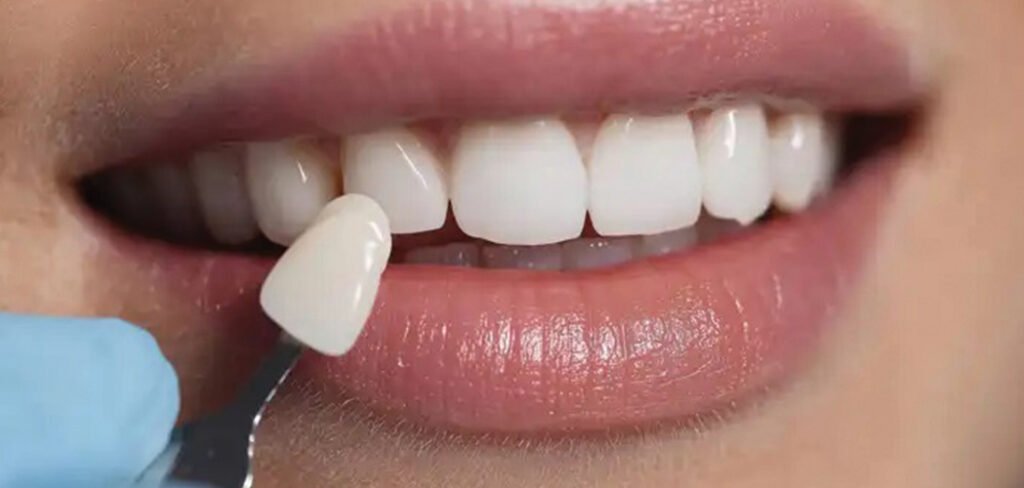
Here’s the simplest way to think about it. A veneer is a thin shell, usually porcelain, that gets bonded to the front of your tooth. It can change the color, the shape, the length, even how the light hits the surface. What it can’t do is move the tooth underneath. The root stays exactly where it was before you walked into the office.
That’s really the whole answer to whether you can get veneers with crooked teeth and expect it to actually last. Veneers fix how a tooth looks. Crookedness is about where a tooth sits. Those are two different problems, and confusing them is where a lot of patients end up disappointed after the fact. A veneer can make a slightly rotated tooth look straight from the front. It cannot rotate that tooth back into position the way braces or aligners do.
If cost or treatment time is a concern, composite veneers for crooked teeth are worth mentioning too. Instead of a lab-made porcelain shell, the dentist sculpts resin directly onto the tooth in one visit. It’s quicker and cheaper, but it doesn’t hold up as long and tends to stain more than porcelain does.
Benefits of Veneers for Mildly Crooked Teeth
For a lot of people, veneers actually beat orthodontics, and it’s not close. A few reasons why:
Speed is the big one. Two visits, maybe three, versus months of tooth movement. You also get to fix more than one thing at once, color, shape, minor rotation, all in the same treatment. There’s nothing to wear every day, nothing to keep track of. And the change is immediate. This is what most people picture when they say “smile makeover.”
That said, the comparison between veneers and Invisalign isn’t really about which one is better. Aligners move your teeth over months, and you have to wear them most of the day for that to work. Veneers change the way your teeth look in a matter of weeks, no daily commitment required. Which one makes sense depends on whether your actual problem is tooth position or just appearance.
Where the Line Is: Mild, Moderate & Severely Crooked Teeth
I break it into three rough categories, and most dentists think about it similarly.
Mild means a tooth turned a few degrees, some minor overlap, maybe a small gap here or there. This is the sweet spot for veneers on crooked teeth. Moderate means more noticeable rotation or crowding, where a veneer can still help but might need more enamel adjustment than you’d like. Severe means teeth that are significantly overlapped or rotated, or a bite line that’s visibly uneven, sometimes called canted teeth. This is where veneers on their own usually aren’t the right first move.
The difference isn’t really about how it looks to you in the mirror. It’s about how much healthy enamel has to be shaved down to make a crooked tooth look straight. The more severe the misalignment, the more the veneer has to compensate for it, and that compensation isn’t free.
Can Veneers Cover Severely Crooked Teeth?
Technically? Sure. A lab can build a veneer thick enough to hide serious rotation. But in practice that usually means one of two things happens. Either the veneer gets built out well past the tooth’s natural shape, which tends to look bulky and fake, or the dentist has to remove more tooth structure from the prominent side of the tooth before bonding anything.
Why the Enamel Trade-Off Matters
That second option is the one that should give you pause. Enamel doesn’t come back once it’s gone. If it’s removed just to compensate for rotation, rather than to create a proper bonding surface, that tooth is now permanently relying on the veneer to protect it. If the veneer chips, there’s no going back to what was underneath.
The bite matters, too. Crowded or rotated teeth restored with veneers without correcting their underlying position often experience chewing forces at unfavorable angles they weren’t built for. Over time that means chipping, premature debonding, or stress getting pushed onto the teeth next door. So yes, can veneers cover crooked teeth even when they’re severe? Physically, it’s possible. Whether it’s the smart first step is a different question, and usually the answer is no.
Do Veneers Straighten Teeth?
Straight answer: no. People ask this a lot, and it’s an easy thing to get wrong. Veneers don’t move teeth the way braces do. What changes is the angle you see from the outside. The root doesn’t budge.
It’s a cosmetic illusion of straight teeth, not actual movement. For mild cases that illusion is exactly what most people want anyway. For anything more serious, it’s just not enough, because whatever going on underneath is still there, simply hidden.
Veneers for Buck Teeth, Overbite & Underbite: What’s Realistic
An overbite or underbite is a bite problem first, meaning how your upper and lower jaw line up, not just how individual teeth look. Overbite veneers and underbite veneers can genuinely improve the front-facing appearance, adjusting length or angle in a way that makes a real visual difference. But the bite itself is a separate issue that usually needs an orthodontic evaluation, because a veneer can’t reposition your jaw.
I’ve had patients assume that once the smile photo looks better, the underlying problem is fixed too. It’s not. Uneven wear, jaw strain, whatever was causing discomfort before, that’s all still there unless it gets addressed on its own.
Veneers for buck teeth, on the other hand, tend to work pretty well when the protrusion is mild. Porcelain can pull the visual line of the upper teeth back into better balance with your lips, no orthodontic movement needed. When the protrusion is more pronounced, moving the teeth first usually gives a better, longer-lasting result, since it’s fixing the actual position instead of just covering it up.
Fixing Crooked Teeth with Veneers vs. Orthodontics First
Veneers or braces? Depends what you’re actually trying to fix. Veneers change how your teeth look, fairly quickly. Braces or aligners change where your teeth sit, slowly. For moderate to severe cases, the sequence that tends to hold up best is a short round of orthodontic movement first, then veneers to finish the look.
| Veneers | Orthodontics (Braces/Aligners) | |
| What it fixes | Color, shape, minor rotation | Actual tooth position and bite |
| Type of fix | Cosmetic | Functional |
| Timeline | A few weeks | Several months to a year or more |
| Best for | Mild misalignment, discoloration, chips | Moderate to severe crowding, bite issues |
| Reversible | No, enamel is removed | Yes, teeth can shift back over time without a retainer |
Not sure which option is right for you? If your teeth are only mildly crooked, veneers may be enough to create a straighter-looking smile. If your bite or tooth position is significantly affected, orthodontic treatment first usually provides a healthier, more natural-looking, and longer-lasting result.
When a tooth’s already aligned before the veneer goes on, the veneer can be thinner and sit more evenly, taking bite pressure the way it’s supposed to. That means it lasts longer, looks more natural, and you’re not sacrificing extra enamel just to fake straightness the tooth doesn’t actually have.
Can You Put Veneers Over Bad or Crooked Teeth Safely?
Not always, and this is genuinely one of those questions that needs an actual exam, not a quick yes or no online. Veneers placed over teeth with an unresolved bite issue, active decay, or gum problems can chip, debond prematurely, or push uneven pressure onto the teeth around them.
Whether you can put veneers over crooked teeth safely comes down to two things really: is your bite stable, and are the teeth underneath healthy enough to be a good foundation. That’s exactly what a Cosmetic Dentistry consultation is for, evaluating both before recommending treatment.
Do You Need Straight Teeth for Veneers?
No, you don’t. What you need is a stable bite and enough healthy enamel to work with, which is basically the same question flipped around. Mild misalignment is exactly the kind of thing veneers handle well.
If your enamel’s already worn down unevenly from a long-term bite issue, our Restorative Dentistry team can figure out whether structural work needs to happen before, or alongside, the cosmetic side of things.
Veneers Before and After Crooked Teeth: What Changes
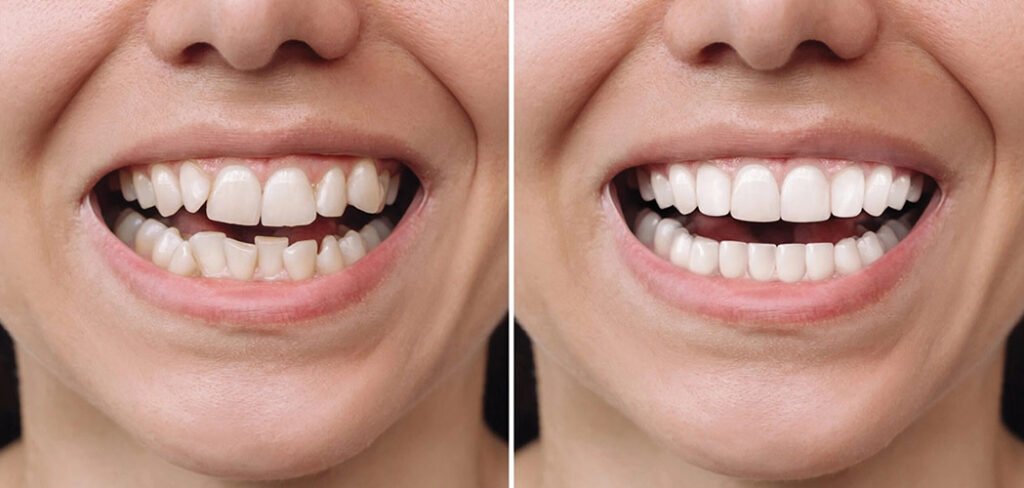
Most veneers before-and-after photos for crooked teeth follow a similar pattern. The rotation that used to catch your eye from across a room smooths out, gaps close, and the front teeth end up reading as a straighter, more even row. What you don’t see in those photos is what happened underneath, whether the bite got corrected first, or the veneer is doing all the work by itself. That’s the part worth asking about before moving forward with treatment, not after.
What a Thorough Veneer Consultation Should Cover
If your consultation feels rushed, that’s worth paying attention to. Before any enamel gets touched, a real evaluation should cover the actual degree of rotation on each tooth (not just “some crowding”), whether the prep stays in enamel or goes into dentin, how your bite actually functions and not just how it looks closed, some kind of visual preview of the expected result, and whether a short round of orthodontic movement first would make the outcome better or last longer.
If your dentist can answer all of that with real specifics instead of general reassurance, that’s a good sign. If the conversation is moving toward treatment before those questions get answered, it’s fine to slow things down.
| Expert Tip: Veneers can dramatically improve the appearance of mildly crooked teeth, but they aren’t a substitute for orthodontic treatment when tooth position or bite function is significantly affected. |
Key Takeaways
Veneers don’t move teeth, they change how they look. Mild crooked teeth are usually great candidates. Severe crowding almost always needs orthodontics first. Healthy enamel is non-negotiable before prep starts. And a real bite evaluation beats a quick answer every time.
CONCLUSION
So, can you get veneers with crooked teeth? In most mild-to-moderate cases, yes. Veneers can improve the appearance of minor rotation, buck teeth, and uneven edges, usually faster than orthodontics alone could. For severe crowding, a real overbite or underbite, or canted teeth, fixing the alignment first is what protects your enamel and your long-term result. The right decision comes from an actual evaluation of your bite and tooth position, not a generic answer from a search result.
Ready to find out if veneers are right for your smile? Book a consultation with Allure Dentistry & Aesthetics in Canton, MA.
FAQ
Q1. Can you get veneers with crooked teeth?
Yes, in most mild-to-moderate cases. A dental evaluation determines whether veneers alone will work or if orthodontic treatment should come first.
Q2. Can veneers cover severely crooked teeth?
Usually not safely on their own. Severe rotation typically needs more enamel removal than is advisable, so orthodontic correction comes first.
Q3. Do veneers fix crooked teeth or just cover them?
They improve the appearance of crooked teeth without moving them. Veneers reshape the front surface of the tooth; the tooth’s actual position stays the same.
Q4.Can veneers fix an overbite or underbite?
They can improve how the front teeth look, but the bite itself usually needs a separate orthodontic evaluation.
Q5. Are veneers a good option for buck teeth?
For mild protrusion, yes. More pronounced cases usually benefit from orthodontic movement first.
Q6.Do you need straight teeth to get veneers?
No. Mild misalignment is well within what veneers can handle. A stable bite and healthy enamel matter more.
Q7.What are canted teeth, and can veneers fix them?
It means the biting edges of the teeth aren’t level. Mild canting can sometimes be adjusted with veneers; more noticeable canting usually needs orthodontics first.
Q8.Are veneers worth it for crooked teeth?
For mild-to-moderate cases, most patients think so, since it solves color, shape, and minor alignment all at once. For severe crowding, orthodontics first is usually the smarter investment.
Q9.Veneers or braces, which is better for crooked teeth?
Depends on the goal. Braces move teeth into a healthier position. Veneers change how teeth look. A lot of patients end up doing both, in that order, for the best result.