
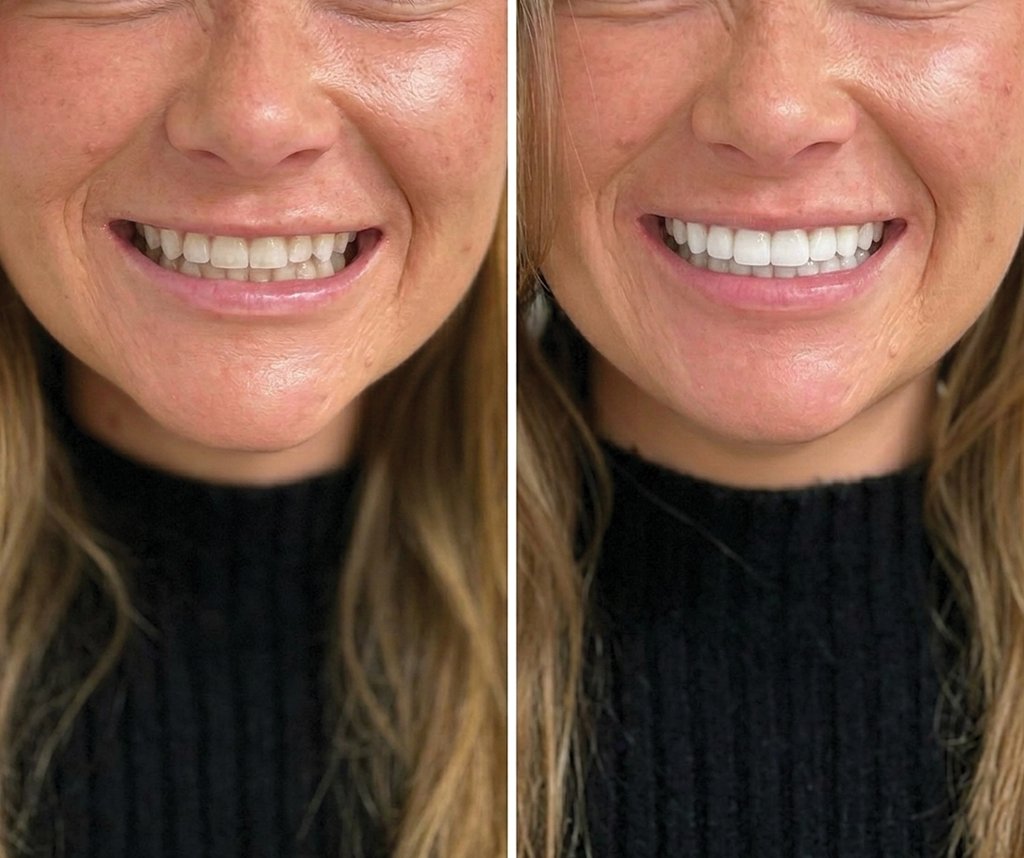
Your smile reflects what others think of you and, more importantly, what you think of yourself. Chips, cracks, and stained edges affect confidence. They shouldn’t be ignored. Dental bonding is one of the most effective, efficient, and economical methods of restoring confidence.
Searching for dental bonding near me? Curious about before and after results? This guide covers every aspect honestly. No jargon. No pressure. Just the information you need to make the best choice for your smile.
What Is Dental Bonding?
Dental bonding, also referred to as cosmetic dental bonding, involves applying tooth-colored resin directly onto the surfaces of teeth. Then, it is sculpted, dried then polished so that it blends seamlessly into natural enamel. The result is a changed or restored tooth that has the appearance and the feel of real dentition.
Unlike porcelain , which are laboratory-fabricated shells requiring multiple visits and deliberate enamel removal, bonding is performed entirely chairside in a single appointment. The material is bonded directly to teeth by gentle conditioning. This removes the need to drill for injections or temporary crowns most of the time.
For those looking for an effective cosmetic enhancement that doesn’t require extensive dental work, this is an exceptional combination of efficiency, performance and aesthetic accuracy.
It is crucial to differentiate the dental bonding process from all other methods that are based on resin. Composite fillings can be used to fill in cavities and repair structural damage, among other uses. The cosmetic dental bonding employs the same kind of material but with the purpose of enhancing the appearance. It shapes, covers, or enhances the health of your tooth for the desired aesthetic results.
The procedure as well as the shading and sculpting required in cosmetic bonding require a sharp eye. It goes beyond standard restoration tasks.
| At Allure Dentistry & Aesthetics, our team will carefully match the shade of your composite to the color of your teeth. |
What Can Cosmetic Dental Bonding Fix?
A major and commonly overlooked benefits of dental bonding is its versatility. This one treatment can address an array of cosmetic issues that a lot of patients think require a variety of procedures or even more aggressive treatments. From chipped incisors to an area you’ve been unsure about for years The bonding process adapts to the issue instead of forcing a uniform solution.
Chipped or Cracked Teeth
Rebuilds broken edges and restores the original tooth shape, protecting exposed surfaces from sensitivity and further damage.
Dental Bonding for Gaps
Closes spaces between front teeth, including noticeable midline gaps, without braces or aligners.
Stubborn Discoloration
Covers stains from tetracycline, fluorosis, or dental trauma that professional whitening cannot address.
Misshapen or Small Teeth
Add volume and reshape teeth that appear too narrow, too short, or have unusual formation compared to neighboring ones.
Worn Tooth Edges
Restores length and shape lost to grinding or normal wear, giving the smile a more youthful profile.
Exposed Root Surfaces
Protects and covers areas where gum recession has left sensitive root surfaces visible and uncomfortable.
For patients with dental bonding for gaps as their primary concern, the improvement can be immediate and dramatic. The provider distributes added resin carefully across teeth on both sides of the gap so that sizing remains natural and proportionate, the teeth look fuller, not oddly wide. Many patients are surprised that a concern they carried for years resolves in a single appointment with no orthodontic treatment required.
Dental Bonding Before and After: What Actually Changes
The most meaningful way to understand dental bonding is to look at what it actually corrects. The dental bonding before and after transformation depends entirely on the concern being addressed but in nearly every case, the change is significant and immediate.
Dental Bonding: Before & After
| Before Bonding |
- Chipped or broken tooth edge from an injury or accident
- Visible gap between front teeth (diastema)
- Stubborn discoloration that whitening cannot reach
- Worn or flattened edges from grinding
- A tooth noticeably smaller than its neighbors
- Exposed root surface causing sensitivity
| After Bonding |
- Seamlessly rebuilt edge — indistinguishable from natural tooth
- Close gaps and unify the smile in just one visit
- Even, bright surface matching surrounding teeth
- Natural contours and youthful edge profile restored
- Tooth reshaped and balanced to match the smile line
- Root surface covered, sensitivity resolved
| Dental bonding before and after photos often leave patients impressed with how natural the results look – not obviously dental work, just an enhanced version of themselves. |
How Long Dental Bonding Lasts and How Can It Be Protected
With proper maintenance, dental bonding stays in good shape for 3 to 10 years before needing a replacement or touch-up. Many patients find their bonding holds up well beyond the lower end of that range, particularly when the treated teeth do not face heavy biting forces. Longevity depends on which teeth are treated, daily habits, and how consistently the patient maintains good oral hygiene.
Bonded teeth require no special care regimen brushing twice daily, flossing once daily, and attending regular professional cleanings are exactly what is needed. A few additional habits extend the life of bonding meaningfully: avoiding biting directly into hard foods such as raw carrots or whole apples with bonded front teeth, refraining from using teeth to open packaging, and wearing a custom nightguard if bruxism is present all make a measurable difference in how long the bonding remains intact.
Composite resin accumulates surface staining more readily than natural enamel or porcelain, particularly from coffee, tea, red wine, and tobacco products. This staining develops gradually and can often be reduced through professional polishing at routine cleaning appointments. If bonding eventually needs refreshing, the procedure is straightforward and considerably less involved than the original application. Most touch-ups are complete in a single short appointment.
Your Next Step Toward a Smile You’re Proud Of
Whether you are dealing with a single chipped tooth or a smile you have been quietly unhappy with for years, dental bonding may be the fastest, most conservative path to a change you have been wanting to make.
Transformations often happen more easily and more accessibly than expected. One appointment. No drilling. No recovery period. Just a smile that looks and feels like the best version of yours.
If you have been searching for dental bonding near me and want to understand what is actually possible for your specific teeth, we would love to show you.
| Experience the breathtaking results that one treatment can produce at Allure Dentistry & Aesthetics in Canton, MA! Book an appointment and witness its magic first-hand. |
Frequently Asked Questions About Dental Bonding
Q1. How long does dental bonding last?
The average time for dental bonding is between 3 to 10 years before it is time to replace or touch up. Longevity is contingent on the place where the bonds are located, day-to-day maintenance habits, and if you are prone to nail grinding or nighttime grinding. A lot of patients report that their bonding time is on the higher end of that interval with consistent dental hygiene and regular checkups.
Q2. Is dental bonding worth it?
Concerning the right thing, absolutely. Bonding provides instant, visible results in just one appointment that does not alter the dental structure. It is among the most easily accessible cosmetic procedures and results in natural-looking results when done by a skilled cosmetic dentist. Patients seeking dental treatments for legitimate reasons, such as chips or gaps, minor discolourations, or reshaping, usually end up very happy with the outcome of their care.
Q3. What does dental bonding before and after look like?
Before treatment, you’ll have a dental exam to check the health of your teeth and discuss your expectations. The bonding process is relaxed and usually takes between 30 and 60 minutes per tooth. After treatment, you’ll leave that same day with a noticeable improvement — a chip filled, a gap closed, or discoloration gone. There’s no recovery time, no swelling, and no restriction on eating or drinking right after your appointment.
Q4. Can dental bonding close gaps between teeth?
Yes, dental bonding can close small gaps between teeth using natural-looking composite resin. It is a quick cosmetic treatment that improves smile appearance with minimal tooth preparation.
Q5. Does cosmetic dental bonding look natural?
When performed well, bonding is nearly indistinguishable from natural tooth structure. The composite resin is shade-matched to your surrounding teeth, layered to mimic the translucency of enamel, and sculpted by hand to match your natural tooth contours. After polishing, the surface sheen closely matches that of natural enamel. Most people who have not been told bonding is present cannot identify it.
Q6. How can I locate dental bonding near me?
When searching for dental bonding near you, look for a cosmetic dentist with specific experience in composite bonding not just general restorative work. Ask to see before and after photos from their actual patients and ask about their shade-matching and sculpting process.