
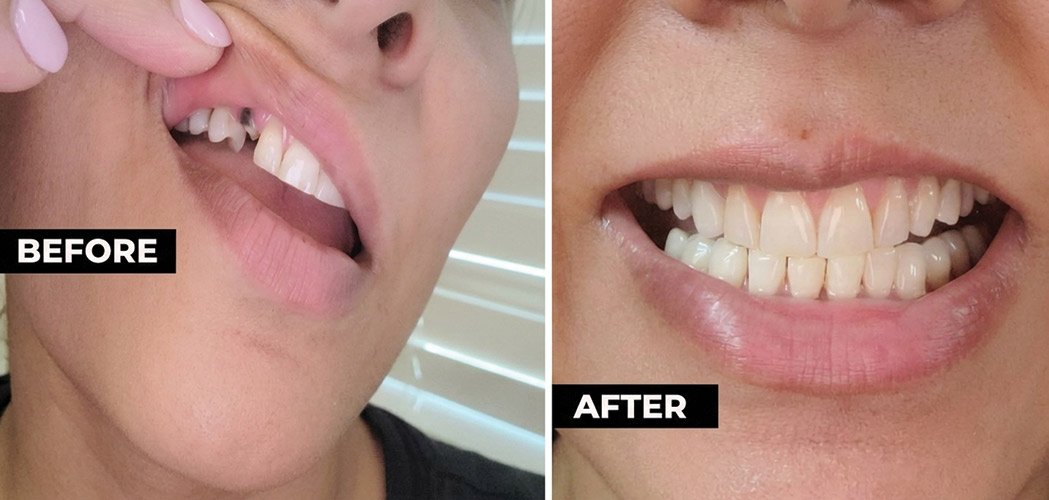
So your dentist mentioned a temporary bridge dental restoration — and now you’re wondering what that even means for your smile. Good news: it’s just a normal step before your permanent bridge. Once you know what it does, the whole thing makes a lot more sense.
What Is a Temporary Bridge?
A temporary bridge is a short-term appliance. It fills the gap left by one or more missing teeth while your permanent bridge is being made. Think of it as a placeholder that protects your bite and your smile until the real one is ready.
- Protects the prepared teeth: once your dentist preps the teeth on either side of the gap, the temporary bridge tooth covers them. This keeps them from being exposed or sensitive.
- Keeps your bite working: you can still chew, talk, and smile like normal while you wait.
- Stops your teeth from shifting: without it, nearby teeth can start drifting into the open space. That can throw off how your permanent bridge ends up fitting.
A lot of patients just call it a temporary dental bridge, or sometimes a temporary bridge tooth. It’s basically filling in for the missing tooth for a couple of weeks.
What Does a Temporary Bridge Look Like?
It’s usually made from acrylic, shaded to roughly match your natural teeth. It won’t look quite as refined as your permanent bridge; no one’s expecting perfection from something you’ll only wear for a couple of weeks, but it does a decent job of blending in while it holds your smile together.
If you’ve ever wondered what a temporary bridge looks like, it closely resembles your natural teeth but is designed for short-term function rather than long-term durability.
Can You Eat with a Temporary Tooth Bridge?
Yes. You can eat normally with a temporary tooth bridge, but it’s best to avoid sticky, hard, or chewy foods that could loosen it. Choosing softer foods and chewing carefully will help protect your temporary bridge until your permanent restoration is ready.
Who Needs a Temporary Bridge?
If you’re getting a permanent bridge, you’ll almost always need a temporary one first, no matter how many teeth are missing. Whether the tooth was lost to decay, an injury, or an extraction, your dentist will usually suggest a bridge as long as the teeth next to the gap are healthy enough to support it. During your first visit, your dentist will check your mouth, take X-rays if needed, and talk through whether a bridge rather than an implant or partial denture makes the most sense for you.
Why Dentists Use Temporary Bridges for Teeth
A permanent bridge doesn’t happen overnight. After your teeth are prepped and impressions taken, those go off to a lab, and the whole process usually takes one to two weeks. During that stretch, temporary bridges for teeth are doing a few things at once:
- They protect the freshly prepared, more sensitive teeth from air, food, and temperature changes.
- This lets you keep living normally, eating, talking, and smiling without a gap staring back at you.
- It also gives your dentist a chance to see how your bite feels before the permanent piece goes in.
The Process: Getting a Temporary Tooth Bridge
Step 1: Tooth Preparation
Your dentist shapes the teeth on either side of the gap so they can support a bridge, which usually means removing a small layer of enamel.
Step 2: Impressions
An impression of those prepared teeth goes to a dental lab, where your permanent bridge gets custom-made to match your bite and smile.
Step 3: Placing the Temporary Bridge
While the lab works on the real one, your dentist fits a temporary bridge dental appliance with a mild, removable adhesive, nothing permanent, since it’s coming off at your next visit anyway.
Step 4: Final Bridge Placement
Once the permanent bridge arrives, the temporary comes off, the area gets cleaned up, and your dentist bonds the final bridge in for good.
What to Expect at Your First Appointment
Your first bridge appointment usually starts with an exam and a conversation about what you’re hoping for. If a bridge ends up being the right call, the prep and impression steps often happen in that same visit — so you’ll walk out with your temporary bridge already in place instead of going without a tooth while you wait.
Adjusting to Your Temporary Bridge
It’s completely normal for it to feel a little off at first. Some people notice sensitivity to hot or cold, a slightly different bite, or just an odd feeling when chewing on that side. Usually this settles down within a few days. But if something feels really wrong ongoing pain, or the bridge just doesn’t sit right don’t wait it out; call your dentist.
Temporary Bridge vs Permanent Bridge: What’s the Difference?
Understanding the difference between a temporary bridge vs permanent bridge helps patients know what to expect. A temporary bridge is designed to protect your teeth during healing, while a permanent bridge is custom-crafted for long-term strength, function, and appearance.
| Temporary Bridge | Permanent Bridge |
| Made from acrylic, lasts a few weeks | Made from porcelain or metal, lasts 10-15 years |
| Held with mild, removable adhesive | Bonded securely for everyday, long-term wear |
| Protects your teeth while you wait | Gives you the final, durable restoration |
| Rough shape and shade match | Custom-crafted to match your exact bite and smile |
How Long Does a Temporary Bridge Last?
Most temporary bridges are built to last one to two weeks, just enough time for your permanent bridge to come back from the lab. They’re not made for long-term wear, so it’s worth keeping that follow-up appointment on schedule.
Bridge vs Dental Implant: A Quick Comparison
A lot of patients ask how a bridge stacks up against a dental implant, since both replace a missing tooth. A bridge leans on the two neighboring teeth for support and tends to move faster, often just a few weeks start to finish. An implant goes straight into the jawbone instead, so it doesn’t touch the neighboring teeth, but it takes longer since your jaw needs time to heal before the crown goes on. Neither one is automatically the better choice; it comes down to your oral health, your budget, and how quickly you want this done.
Caring for Your Temporary Bridge Teeth
Taking good care of your temporary bridge teeth helps protect the prepared teeth underneath and keeps your treatment on track until your permanent bridge is ready.
Care Tips
- Avoid sticky or hard foods: Chewy candy, ice, and hard snacks can knock a temporary bridge loose before it’s supposed to come off.
- Brush gently around it: Keep it clean, but go easy since the adhesive isn’t nearly as strong as permanent bonding.
- Be careful flossing: Ask your dentist the right way to floss around it so you don’t accidentally pull the bridge loose.
- Call if it feels loose: It happens more often than you’d think, and it’s usually an easy fix if you contact your dentist promptly.
Materials Used in Permanent Bridges
Your dentist has a few material options for the permanent bridge. Porcelain fused to metal has been a solid, reliable choice for decades. All-ceramic or all-porcelain versions blend in even more naturally, which is why they’re often picked for bridges near the front of the mouth, where looks matter the most.
Long-Term Aftercare Once Your Permanent Bridge Is Placed
Once the permanent bridge is in, take care of it more or less like your natural teeth. Brush twice a day, floss daily — the teeth underneath the crowns still need protecting from decay, even though they’re covered. A water flosser or floss threader makes cleaning under the bridge a lot easier than fighting with regular floss. Keep up with checkups every six months so your dentist can catch anything early. Look after it properly, and a good bridge can easily last well past a decade.
Cost Considerations for Dental Bridges
What a bridge costs depends on a few things: how many teeth are missing, the materials used, and whether any extra work is needed first. Most dental insurance covers at least part of it, since a bridge counts as restorative treatment, not cosmetic. The team at Allure Dentistry & Aesthetics can give you a real estimate during your consultation, along with any financing options, so nothing catches you off guard.
Pros and Cons of a Temporary Bridge
Pros:
protects your prepared teeth, keeps your bite functional while you wait, and gives you a preview of how the permanent bridge will feel.
Cons:
not as strong as the permanent version, can loosen if you’re not careful with food, and it’s only ever meant to be short-term.
Why Choose Allure Dentistry & Aesthetics for Your Bridge Treatment
At Allure Dentistry & Aesthetics in Canton, MA, Dr. Carolina Velez and Dr. Daniel Gonzalez guide patients through the whole bridge process — from the first consultation to the final placement. Whether it’s one tooth or several, they’ll walk you through every step, including exactly what to expect from your temporary bridge before the permanent one goes in.
Conclusion
Although a temporary bridge dental restoration is only temporary, it plays an important role in protecting your prepared teeth, maintaining your bite, and keeping your smile functional while your permanent bridge is being created. If you’re missing a tooth and wondering whether a bridge is right for you, contact us today to schedule a consultation and find the right way to restore your smile.
Frequently Asked Questions
Q1. Can a Temporary Bridge Fall Out?
Yes. Since it’s held in place with a mild, removable adhesive rather than permanent bonding, it can occasionally come loose. Don’t try to fix it yourself — just call your dentist for the proper repair.
Q2. Does getting a temporary bridge hurt?
Some mild sensitivity right after your teeth are prepped, sure — but placing the temporary bridge itself isn’t painful.
Q3. Can I eat normally with a temporary tooth bridge?
Pretty much, yes. Just skip sticky, hard, or chewy foods that could loosen it before your permanent one’s ready.
Q4. Is a temporary bridge the same as a temporary crown?
No — a crown covers just one tooth, while a bridge spans the gap by connecting to the teeth on either side of it.
Q5. How soon will I get my permanent bridge after the temporary one?
Usually one to two weeks, depending on how long the lab needs to finish your custom bridge.
Q6. Can a temporary bridge be whitened or adjusted?
Not really — it’s not built for that kind of long-term change since you’ll only have it a short while. Shade matching happens before it’s ever placed.